
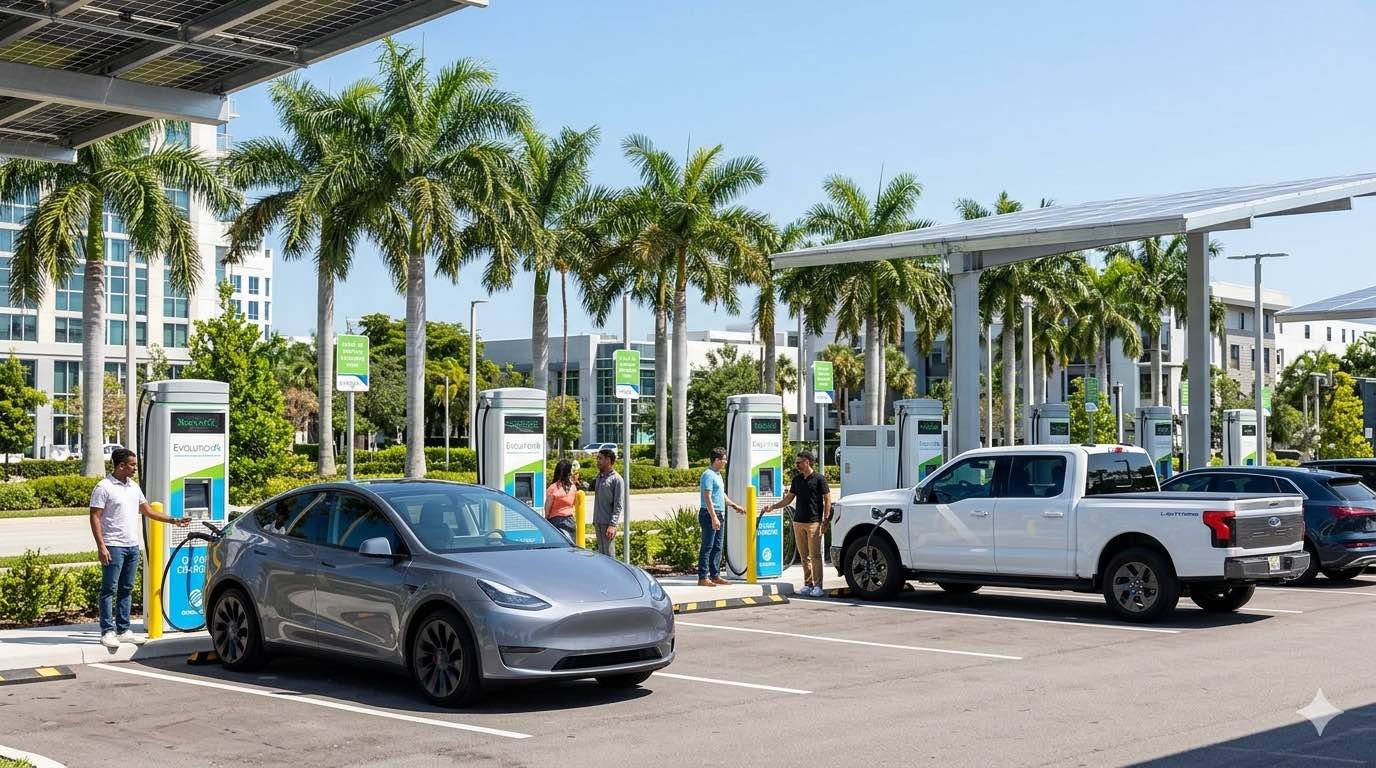
Earth Day: Everything About Electric Car Insurance in Florida
Earth Day arrives on April 22, and if you’re considering making the switch to an electric car, there’s something you probably haven’t researched yet: insurance. And it turns out that electric car insurance in Florida works differently than for a gas car.
The question everyone asks is straightforward: does it cost more to insure an EV? The short answer is yes, it generally costs 15% to 50% more. But there are specific reasons for that, and there are also ways to reduce that cost.
Let’s look at everything you need to know before signing for that Tesla, Rivian, or any other electric vehicle.
Why electric cars cost more to insure
It’s not that insurers have something against EVs. The higher cost comes from three very concrete factors:
The vehicle price is higher
A typical EV costs more than a comparable gas car. If the vehicle value is higher, collision and comprehensive coverage is also higher. Simple as that.
A Tesla Model 3 starts at about $44,000. A comparable gas sedan is closer to $35,000. That $9,000 difference is reflected in your premium.
Repairs are more expensive and complicated
Here’s the real problem. EVs have specialized components that require certified technicians, specific tools, and parts that are sometimes hard to find.
The battery is the clearest example. If it’s damaged in an accident, replacing it can cost between $5,000 and $20,000 depending on the model. In many cases, a damaged battery means the insurer declares the car a total loss because the repair cost exceeds the vehicle’s value.
Sensors, cameras, and driver assistance systems also complicate things. A minor hit to a normal car’s bumper is a simple repair. The same hit on a Tesla might require recalibrating multiple sensors and cameras, adding hundreds or thousands of dollars to the claim.
There are fewer shops that can work on EVs
In Florida we already have plenty of charging infrastructure, but certified shops for repairing EVs are still limited. Less competition means higher prices. And when there’s a waiting list for repairs, there are also additional rental car costs while you wait.
How much more it actually costs
The numbers vary depending on the source, but here’s the general picture:
The national average for insuring an EV with full coverage is around $3,300 to $4,000 per year. For a comparable gas car, we’re talking $2,700 to $2,900.
That’s a difference of $500 to $1,100 per year, or between $40 and $90 additional per month.
But the specific model matters a lot. A Volkswagen ID.4 or Chevrolet Bolt can cost almost the same to insure as a gas car. A Tesla Model X can cost twice as much as a traditional luxury SUV.
EVs from brands that also sell gas cars (Ford, Chevrolet, Volkswagen, Hyundai) tend to be cheaper to insure than those from exclusively electric brands (Tesla, Rivian, Lucid).
Specific coverages you need to consider
Your auto insurance policy for an EV includes the same basic coverages as any other car: liability, collision, comprehensive, uninsured motorist. But there are some additional considerations.
Battery coverage
The battery is the most expensive component of your EV. Some insurers offer specific battery coverage that goes beyond the manufacturer’s warranty. This can cover capacity degradation, damage from extreme conditions, or failures the warranty doesn’t cover.
Specifically ask if your policy covers full battery replacement in case of accident damage. Don’t assume it’s included.
Coverage for your home charger
If you installed a Level 2 charger at your house, that equipment can cost between $500 and $2,000, plus installation. Your homeowners insurance might cover it, but not always. Some auto insurers offer charger coverage as part of the EV policy.
Lemonade, for example, includes coverage for your charger and even emergency charging assistance if you run out of battery on the road.
Specialized roadside assistance
Running out of battery isn’t the same as running out of gas. You can’t just walk to the nearest station and come back with a gallon. You need a tow truck or a mobile charging truck.
Make sure your policy includes roadside assistance that specifically covers EV situations. Not all roadside assistance services have the capability to handle electric vehicles correctly.
“Green” discounts that can help
Some insurers offer specific discounts for electric or hybrid vehicles. They’re not universal, but it’s worth asking.
Travelers offers up to 10% off for green vehicles. Liberty Mutual has discounts for EVs in some states. Lemonade offers discounts and additional coverages designed specifically for electric cars.
Beyond EV-specific discounts, all standard discounts still apply: bundling with homeowners, good driving history, autopay, paperless billing, good student, telematics.
A tip: since EVs tend to be driven fewer miles than gas cars (because people use them more for short trips), mileage-based insurance programs can be especially beneficial.
The state of EVs in Florida
Florida is the second state with the most registered electric vehicles in the country, behind only California. There are already over 250,000 EVs on Florida roads.
Charging infrastructure is growing rapidly. The state has more than 9,000 public charging stations, with the highest concentration in the Orlando, Miami, and Fort Lauderdale areas. Florida is receiving $198 million in federal funds to expand the charging network between 2022 and 2026.
This means it’s more practical every year to have an EV in Florida. But it also means insurers are accumulating more claims data on EVs, which should eventually help lower premiums.
How to reduce your EV insurance cost
If you’ve already decided you want an electric car, or already have one, here are concrete strategies to reduce what you pay:
First, compare quotes from multiple insurers. Prices vary dramatically between companies for the same vehicle. Travelers and ALFA tend to have the lowest rates for EVs.
Second, consider a higher deductible. If you can handle a $1,000 or $1,500 deductible instead of $500, your monthly premium drops significantly.
Third, ask about all available discounts. Specifically mention you have an EV and ask if there are green or alternative vehicle discounts.
Fourth, bundle with your home or renters insurance. The bundle discount applies equally for EVs and can save you 10-25%.
Fifth, if you drive few miles, consider mileage-based insurance. Companies like Lemonade or Mile Auto charge per mile driven, which can be cheaper if your EV is primarily for short trips.
The complete cost of ownership calculation
Before deciding if an EV makes sense for you, do the complete calculation:
Insurance costs more, but fuel costs much less. Charging an EV at home costs a fraction of what you’d spend on gas. Maintenance is also lower because there are no oil changes, transmission filters, or exhaust system.
The federal tax credit of up to $7,500 for qualifying new EVs helps offset the higher purchase price.
When you add it all up, many EVs end up costing the same or less than a comparable gas car over the life of the vehicle. Higher insurance is a factor, but it’s not the only factor.
What you should do before buying
If you’re considering an EV, do this before signing:
Get insurance quotes for the specific model you want. Don’t assume all EVs cost the same to insure. The difference between models can be thousands of dollars per year.
Ask about EV-specific coverages: battery, charger, specialized assistance.
Calculate the total cost of ownership including insurance, electricity, reduced maintenance, and any available tax incentives.
And remember: EVs aren’t for everyone, but for many people in Florida, especially in urban areas with good charging infrastructure, they can be a smart financial and environmental decision.
Thinking about an electric car? Get your insurance quote before you buy. We’ll help you find the best coverage at the best price for your new EV.