
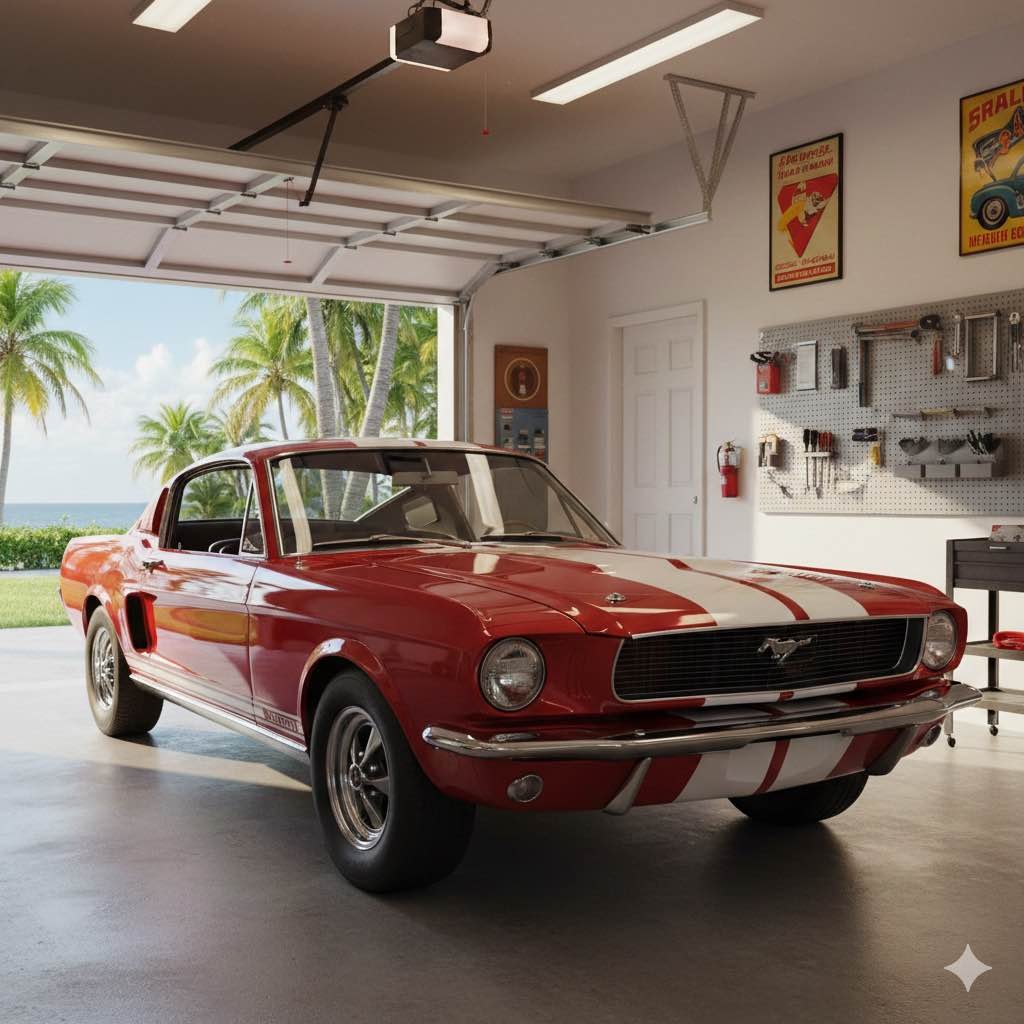
Because some vehicles are more than transportation—they’re history, they’re legacy, they’re love on four wheels
More Than a Car: A Declaration of Love
There’s a fundamental difference between a car and a classic car.
A car takes you from point A to point B.
A classic car transports you to another era. It connects you to memories. To your father teaching you to drive. To your grandfather telling stories of when he was young. To that first date that changed your life.
A regular car loses value every day. A classic car gains value because it gains history.
Classic car insurance says the same thing about the machine you love:
“I care about protecting what you’ve built. I care about preserving this piece of history. I care that years of work, love, and dedication don’t disappear in an instant. I value your passion enough to insure it properly.”
The Problem: Your Regular Insurance Doesn’t Understand Your Car
Picture this:
You own a 1967 Ford Mustang that you restored over 5 years. You invested $45,000 in restoration. The car is now worth $75,000 in the collector market.
But your regular insurance—the same one you use for your daily driver Honda or Toyota—only sees this:
- A “used car” nearly 60 years old
- “Book value”: $8,000 (if that)
- Depreciation: Total
If something happens to your Mustang, you receive $8,000.
You lost $67,000. And something more important: you lost years of your life, priceless memories, and a piece of history you can never replace.
This isn’t hypothetical. It happens every day to classic car owners who didn’t know the difference between coverage types.
The Three Valuation Types: The Difference of Tens of Thousands
1. Actual Cash Value (ACV)
How it works: The insurer pays what they determine your car is worth at the time of loss, minus depreciation.
The problem: Classic cars don’t depreciate—they appreciate! But the ACV formula doesn’t understand this.
Typical result:
| What you invested | What it’s worth | What you receive |
|---|---|---|
| $50,000 | $80,000 | $10,000-$15,000 |
Verdict: ❌ NEVER use ACV for a classic car.
2. Stated Value
How it works: You declare how much your car is worth. The insurer accepts it… with a catch.
The catch: In case of total loss, the insurer can choose to pay the stated value OR actual cash value, whichever is lower.
The problem: You think you’re covered for $75,000. But the insurer decides the “actual value” is $30,000, and that’s what you get.
Typical result:
| Stated value | What you receive |
|---|---|
| $75,000 | $30,000 (ACV) |
Verdict: ⚠️ Better than ACV, but guarantees nothing.
3. Agreed Value ✅ THE GOLD STANDARD
How it works: You and the insurer agree on the exact value of the vehicle before issuing the policy. With documentation, appraisals, photos.
The guarantee: If a covered total loss occurs, you receive 100% of the agreed value. No depreciation. No negotiation. No surprises.
Result:
| Agreed value | What you receive |
|---|---|
| $75,000 | $75,000 |
Why it’s the standard:
- Eliminates post-loss disputes
- Recognizes modifications, restorations, rarity
- Protects your real investment
- Includes taxes and fees in many policies
Verdict: ✅ THE ONLY OPTION for serious classic cars.
Visual Comparison: Same Car, Three Outcomes
Scenario: 1969 Chevrolet Camaro SS restored. Collector market value: $85,000.
| Coverage Type | Total Loss | What You Receive | Financial Loss |
|---|---|---|---|
| ACV (regular insurance) | Yes | $12,000 | -$73,000 |
| Stated Value | Yes | $35,000 | -$50,000 |
| Agreed Value | Yes | $85,000 | $0 |
The difference between agreed value and ACV can be $50,000-$70,000 or more.
The Classic Car Market: Numbers You Need to Know
A $39.7 Billion Market (And Growing)
The global classic car market was valued at $39.7 billion in 2024 and is projected to reach $77.8 billion by 2032, with annual growth of 8.7%.
In the United States:
- Market valued at $12.6 billion (2024)
- Projection: $26 billion by 2032
- North America represents 45% of the global market
- Over 80,000 vehicles sold at auction in 2024
What’s Appreciating in 2025?
| Category | Trend | Examples |
|---|---|---|
| Classic Lamborghini | ⬆️ +10% | Miura, Countach, Diablo |
| Porsche Carrera GT | ⬆️ Strong | 2004-2006 |
| 90s JDM | ⬆️ Strong | Toyota Supra, Nissan Skyline GT-R, Honda NSX |
| Classic BMW M | ⬆️ Moderate | E30 M3, M1 |
| Ford GT 2005-2006 | ⬆️ Moderate | First modern generation |
| American muscle cars | ⬇️ Correction | Camaro, Mustang, Challenger (saturated market) |
| Pre-war (1920s-30s) | ⬆️ +14% | Rare, well-preserved models |
Buyer Profile
- Peak buying age: 52-75 years
- Younger collectors: Entering market with “modern classics” from 80s and 90s
- Trend: Less speculation, more genuine appreciation for automotive history
What Qualifies as a “Classic Car” in Florida?
Official Definitions
By Florida Law:
- Antique Vehicle: 30+ years, original manufacturer specifications
- Collector Plate: Occasional use, exhibitions, clubs
By Insurers (varies):
| Insurer | Minimum Age | Other Requirements |
|---|---|---|
| Hagerty | Varies by model | No daily use, secure storage |
| American Collectors | 10+ years | Collectible value, limited use |
| Grundy | No fixed limit | Exceptional value, historical significance |
| American Modern | 19+ years | Collectible or special interest |
Types of Vehicles Covered
✅ Generally covered:
- Classic cars (25-50+ years)
- Antique cars (pre-1948)
- Muscle cars
- Vintage sports cars
- Exotics and supercars
- Hot rods and street rods
- Restomods
- Limited edition vehicles
- Replicas and kit cars
- Classic trucks
- Vintage motorcycles
⚠️ May require special evaluation:
- Vehicles under restoration
- Significantly modified cars
- “Modern classics” (80s-2000s)
- High-value vehicles (+$500,000)
Classic Car Coverage: What’s Included (And Not in Regular Insurance)
Specialized Coverages
| Coverage | Description | In regular insurance? |
|---|---|---|
| Agreed/Guaranteed Value | 100% agreed payout on total loss | ❌ No |
| Original Parts | Replacement with OEM or period parts | ❌ No |
| Spare Parts Coverage | Parts in your garage (up to $500-$2,000) | ❌ No |
| Vehicle Under Construction | Protection during restoration | ❌ No |
| Specialized Roadside Assistance | Flatbed towing mandatory | ⚠️ Partial |
| Show Coverage | Car shows, club events | ❌ No |
| Cherished Salvage | Keep the car + receive payment | ❌ No |
| Tools Coverage | Specialized restoration tools | ❌ No |
| Automobilia | Related collectibles (signs, emblems) | ❌ No |
| Trip Interruption | Expenses if car breaks down away from home | ⚠️ Partial |
| Automatic Appreciation | Value increases over time | ❌ No |
Typical Qualification Requirements
- Separate daily driver vehicle – Can’t use the classic for commuting
- Secure storage – Enclosed garage, preferably climate controlled
- Mileage limits – Generally 2,500-7,500 miles/year
- Clean driving history – No serious violations in 3+ years
- Documentation – Photos, appraisals, restoration records
How Much Does Classic Car Insurance Cost?
The Surprise: It’s Cheaper Than Regular Insurance
Yes, you read that right. Classic car insurance typically costs 20-40% less than regular auto insurance.
Why?
- Limited driving = less accident risk
- Secure storage = less theft/damage risk
- Enthusiast drivers = more care, fewer claims
- Exceptional maintenance = safer vehicles
Average Costs
| Vehicle Value | Estimated Annual Premium |
|---|---|
| $15,000-$25,000 | $200-$400 |
| $25,000-$50,000 | $300-$600 |
| $50,000-$100,000 | $500-$900 |
| $100,000-$250,000 | $800-$1,500 |
| $250,000-$500,000 | $1,500-$3,000 |
| $500,000+ | $3,000+ |
Comparison: Average regular insurance = $2,278/year for full coverage.
Real Example
A Colorado collector insures 3 classic Volkswagens (1965 Bus, 1968 Karmann Ghia, 1958 Beetle) with Hagerty for a total of $609/year with agreed and guaranteed value coverage.
That’s ~$200 per vehicle. Try finding that with regular insurance.
The Most Costly Mistakes (And How to Avoid Them)
Mistake #1: Using Regular Insurance for a Classic Car
The cost: Potentially tens of thousands of dollars in case of loss.
The solution: Specialized policy with agreed value.
Mistake #2: Assuming “Stated Value” = Full Protection
The cost: Insurer can pay ACV instead of stated value.
The solution: Demand “Agreed Value” or “Guaranteed Value” coverage.
Mistake #3: Not Updating Value After Restorations
The cost: Your policy reflects value from 3 years ago, not current.
The solution: Update your appraisal and policy after each significant improvement.
Mistake #4: Outdated Appraisals
The cost: Market goes up, your coverage doesn’t.
The solution: Professional appraisal every 2-3 years, or after market changes.
Mistake #5: Ignoring Storage Requirements
The cost: Claim denied for not meeting policy conditions.
The solution: Read storage requirements and comply strictly.
How to Determine Your Classic Car’s Value
Valuation Methods
- Professional Appraisal
- Physical inspection by certified expert
- Considers condition, originality, modifications, history
- Cost: $150-$500
- Recommended for vehicles worth $25,000+
- Valuation Guides
- Hagerty Valuation Tool (free online)
- Kelley Blue Book Classic Cars
- NADA Classic Car Guide
- Hemmings Price Guide
- Auction Results
- Bring a Trailer
- Barrett-Jackson
- Mecum Auctions
- RM Sotheby’s
- Bonhams
- Comparable Sales
- Hemmings Motor News
- ClassicCars.com
- Cars & Bids
Condition System (Hagerty Scale)
| Condition | Description | % of Maximum Value |
|---|---|---|
| #1 Concours | Perfect, show winner | 100% |
| #2 Excellent | Professional restoration, minimal wear | 80-90% |
| #3 Good | Functional, cosmetically good, driveable | 60-70% |
| #4 Fair | Functional, needs cosmetic work | 40-50% |
| #5 Project | Non-functional, requires complete restoration | 20-30% |
Top Classic Car Insurance Companies
Classic Car Specialists
| Insurer | Strengths | Considerations |
|---|---|---|
| Hagerty | Market leader, no fixed mileage limit, Guaranteed Value® | Higher premium than some competitors |
| American Collectors | Good rates, appreciation coverage | Specific eligibility requirements |
| Grundy | No mileage limits, automatic new acquisition coverage | Less known |
| American Modern | Available in all 50 states, flexible options | Part of larger conglomerate |
| J.C. Taylor | Specialist since 1972, good rates | Less technology/app |
Traditional Insurers with Classic Options
| Insurer | Classic Option | Notes |
|---|---|---|
| State Farm | Classic Car Coverage | Through partners |
| Progressive | Classic Car by Hagerty® | Partnership with Hagerty |
| The Hartford | Via Hagerty | For AARP members |
| Safeco | Regular-use option | Up to 10,000 miles/year |
| GEICO | Classic Car Insurance | Limited options |
Florida: Special Considerations
Insurance Requirements in Florida
Florida is a “no-fault” auto insurance state, but this applies mainly to regular insurance. For classic cars:
- PIP (Personal Injury Protection): Generally not available on classic policies
- Classic insurance = Separate policy in addition to your daily vehicle insurance
- Requirement: Must have regular auto insurance on another vehicle to qualify
Florida’s Climate: A Factor
| Risk | Impact | Protection |
|---|---|---|
| Hurricanes | Wind damage, flooding, debris | Comprehensive coverage, elevated storage |
| Humidity | Corrosion, interior mold | Climate-controlled garage |
| Intense sun | Paint damage, interior fading | Covered storage, car covers |
| Salt (coastal areas) | Accelerated corrosion | Frequent washing, protective coatings |
Classic Car Events in Florida
Your classic car policy covers you at these events:
- Daytona Turkey Rod Run – Thanksgiving weekend
- Amelia Island Concours d’Elegance – March
- Boca Raton Concours d’Elegance – February
- Festivals of Speed – Various locations
- Cars & Coffee – Multiple cities
- Mecum Auctions Kissimmee – January (4,000+ vehicles)
Checklist: Before Buying Classic Car Insurance
Documentation Needed
- Current photos of vehicle (exterior, interior, engine, undercarriage)
- Restoration records and invoices
- Professional appraisal (if applicable)
- Vehicle title
- Ownership history (if available)
- Authenticity certificates or production numbers
- Maintenance records
Questions for Your Agent
- Is this Agreed Value or Stated Value coverage?
- What happens if the car’s value increases after buying the policy?
- Is there a mileage limit? What happens if I exceed it?
- What storage requirements exist?
- Does coverage include flatbed roadside assistance?
- Can I choose my repair shop?
- Are original/OEM parts guaranteed in repairs?
- Is there coverage while the car is at a show?
- What if I want to keep it after total loss (salvage)?
- How often should I update the appraisal?
How to Reduce Your Classic Car Premium
Proven Strategies
- Limit your annual mileage
- 3,000 miles vs 7,500 = 20-30% less
- Improve security
- Anti-theft alarm
- GPS tracking system
- Locked garage
- Take a defensive driving course
- Some offer 10-15% discount
- Insure multiple vehicles
- “Fleet” discounts for 2+ classic cars
- Increase your deductible
- From $500 to $1,000 can reduce 10-15%
- Bundle with regular insurance
- Some carriers offer multi-policy discounts
- Clean history
- 5+ years claim-free = preferred rates
The Emotional Perspective: Why This Matters
It’s Not Just a Car
When you insure your classic car properly, you’re not protecting metal and paint.
You’re protecting:
- The 5-year project you worked on every weekend
- Your father’s gift that you promised to care for
- The memories of road trips that will never be repeated
- The financial investment you planned to pass to your children
- The piece of history you preserved for future generations
- Your escape from modern life stress
- Your community of friends you met at car meets
The Right Insurance Says:
Conclusion: Love That Protects
A classic car isn’t a possession. It’s a responsibility. A legacy. A story you continue writing every time you turn the key.
The right insurance isn’t an expense—it’s an investment in peace of mind. It’s the security of knowing that decades of history, thousands of hours of work, and irreplaceable value are protected.
Because true love whether for a person or a machine plans to protect what it loves.
Do you have a classic car that deserves real protection? We understand. Let’s talk about how to protect your investment with agreed value coverage.
📞 Ready to Protect Your Classic?
- Classic car insurance specialists in Florida
- Agreed value options
- We speak Spanish
- We understand your passion